Showing posts with label diagram. Show all posts

29 July 2022

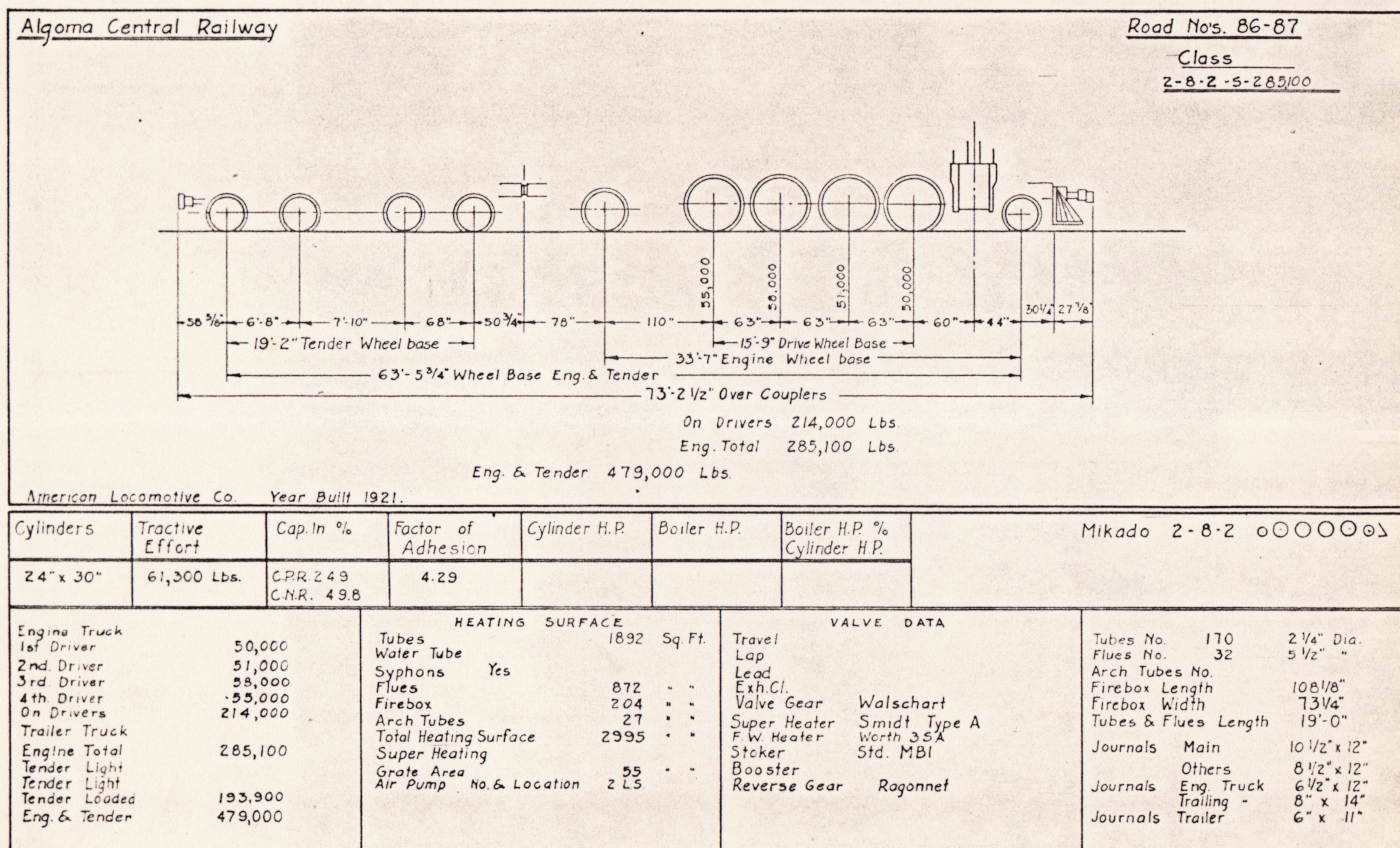
ACR 1950 Locomotive Side Elevations - Algoma Central and Algoma Eastern Railways


In 1980, LC Gagnon wrote to the Algoma Central, requesting data on some of its engines. Also in his files were a couple of circa 1950 articles from Railroad magazine on ACR operations. 


It isn't clear whether the diagrams were printed from microfilm or if they were photocopied to respond to my father's request. 
A typical unprocessed image appears below.


Atlas of Canada; 1915; Government of Canada.

The frail, old source atlas (above) is 27 inches by 18 inches when opened and balanced on a scanner. Please pardon the blurry gutter in the centre of the map.

You can see the Algoma Central and Algoma Eastern Railways in 1915. The territories deemed to be tributary to the various railway lines are shaded. Far to the right, you can see the Algoma Eastern running between Little Current and Sudbury - it was eventually absorbed into the CPR. 

At the end of this post are references to some of the excellent books already written by Dale Wilson (published by Nickel Belt Rails) about the railways in this area. 

Heading west annually to visit with Rolly and Theresa Martin in Schreiber and my aunt and uncle in Portage la Prairie ... we went on a number of the ACR excursions to the Agawa Canyon. We have also been to Michipicoten Harbour, Hawk Junction and Hearst. 

... However, I've never been an authority on the ACR and I defer to you the reader on any fact you may raise about the diagrams below. To the best of my ability, I have arranged the diagrams by railway: ACR, followed by AER. Within those two groupings, the diagrams are sorted by road number. Note that some of the engines changed owners during their operating lives.

My main focus is just to present all the diagrams which were generously compiled and sent to my father by a railway official ... in case they are interesting or helpful to people in the future.




*  *  *

Algoma Eastern Railway


To find out more about these railways, these books are excellent:


Algoma Eastern Railway; Dale Wilson; 1977; Nickel Belt Rails. ISBN 0-920356-00-1

The Algoma Central Railway Story; Dale Wilson; 1984; Nickel Belt Rails. ISBN 0-920356-05-2

Algoma Rails; Dale Wilson; 2009; Nickel Belt Rails. ISBN 0-920356-15-X


You can search for Nickel Belt Rails to find the latest books by Dale Wilson.


19 March 2022

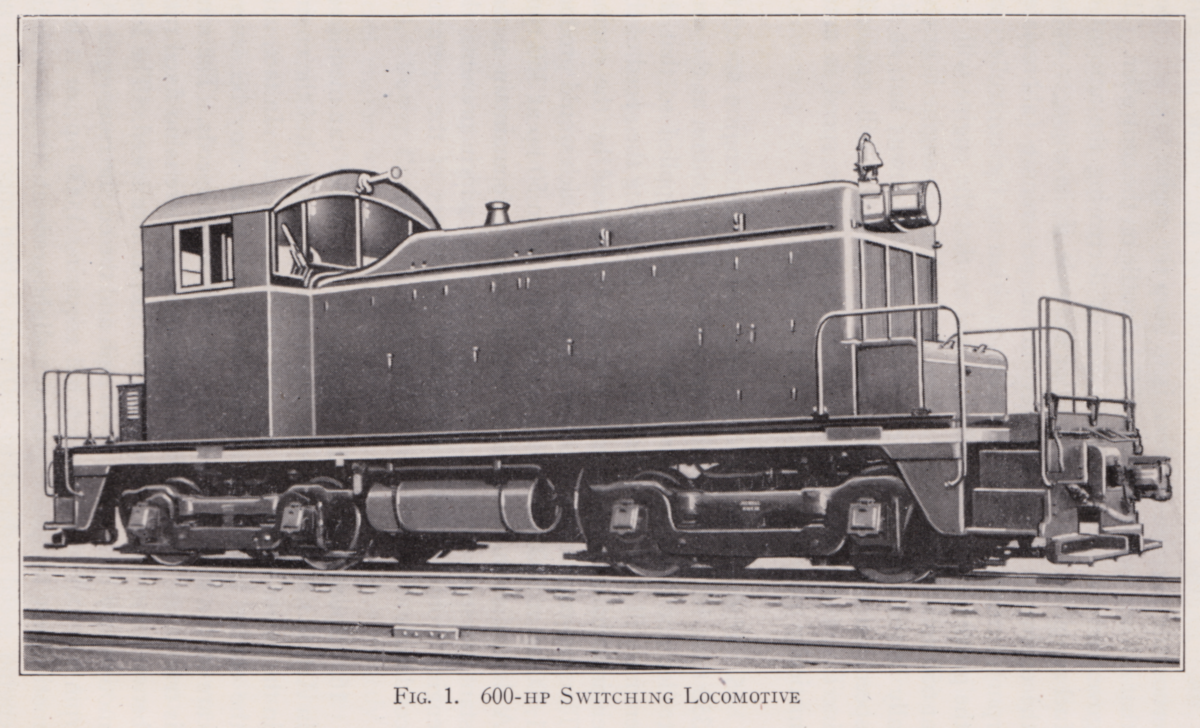
1945 Introduction to Diesel Electrics


Here is another selection from the Scranton-based International Library correspondence course on diesels. A modern perspective (once explained to me) is that electric locomotives have the luxury of being extremely powerful (per unit of weight) because they don't have the burden of toting around their own generating facilities.

Here is a historical contrast. In the era of this book, published almost 80 years ago, steam locomotives and streetcars were the commonly-seen self-propelled rail vehicles. Consequently, the 'helpful perspective' you'll read below is that diesels are like streetcars. However, they don't require catenary, power stations and wayside electrical switching gear wherever they operate. 

History and more history.

While some of the actual technical operating details are very practical and probably too dry for your on-screen 'pleasure reading time', these books are quite interesting as historical documents. They were written at the dawn of a period of dynamic technological change on US and Canadian railways. Elsewhere, World War Two was ending in Europe and then Asia. People were leaving the armed services to return to civilian life. Automobiles and the new suburban housing developments would allow some urban workers to raise their families away from the industrial coal smoke of the cities. So a lot was changing as these books were published.

Who might order these self-instruction books? 

Often it would be highly-motivated workers. Train crew and shop staff would receive the compulsory railway company and/or manufacturer's training. In some cases, the material in these books might be prescribed, with a company-designed examination to follow. 

Beyond that, people seeking promotion were probably well-advised to demonstrate that they saw 'the big picture' - not just the well-worn career progression steps which others usually followed. This type of book offered a convenient after-work option for self-study - particularly in small railway settlements where there were few opportunities for specialized formal education.

Should I hitch my wagon to a diesel?

In the 1940s, there was probably a lot of skepticism among experienced employees whether diesels would ever do more than tow pretty streamliners. Would they ever be as powerful and reliable as steam freight locomotives? 

Some contemporary accounts describe experienced steam engineers having one over-the-road session with a company trainer (likely with a company supervisor also in the cab) during one of their scheduled passenger runs. After this they were proficient - that's how good diesels were! As clean and simple as driving a bus! Was it really this quick and easy to get employees converted to diesels?

First, anyone on a passenger run would have years, if not decades, of railway operating experience - including excellent knowledge of the physical characteristics of their piece of the railway.

Second, hauling a relatively light passenger train with a brand-new diesel, and a company rep at your elbow who saw to it that the power was babied - was not 'the railroad of the future' ...

Once the power was maintained by the railway's newly-trained shop staff ... the engineer (or fireman) would be expected to solve most problems if a diesel failed during a run. A persistent flashing light, an annoying deafening bell, a problem with brakes, pulling power or steam for train heat would be the responsibility of the engine crew. With new locomotive models, there might also be class-wide problems which would be revealed only after operational experience had been gained. In other words, the first edition operators manual might be of no help to the newly-fledged diesel hogger with a problem out on the road. At night. In a snowstorm. Etc.

Just enjoy today.

Fortunately, all of that stress is still in the future. Below, the reader is being given a nice general overview of some of the developmental history of internal combustion on the rails, the characteristics of the modern diesel-electric and a quick introduction to switch engines. 

Diesel switch engines operating within a yard are nice to start on, because 'there will always be someone around who can help you'. 

You hope.


The diagram below comes from another book in this series.


26 November 2021

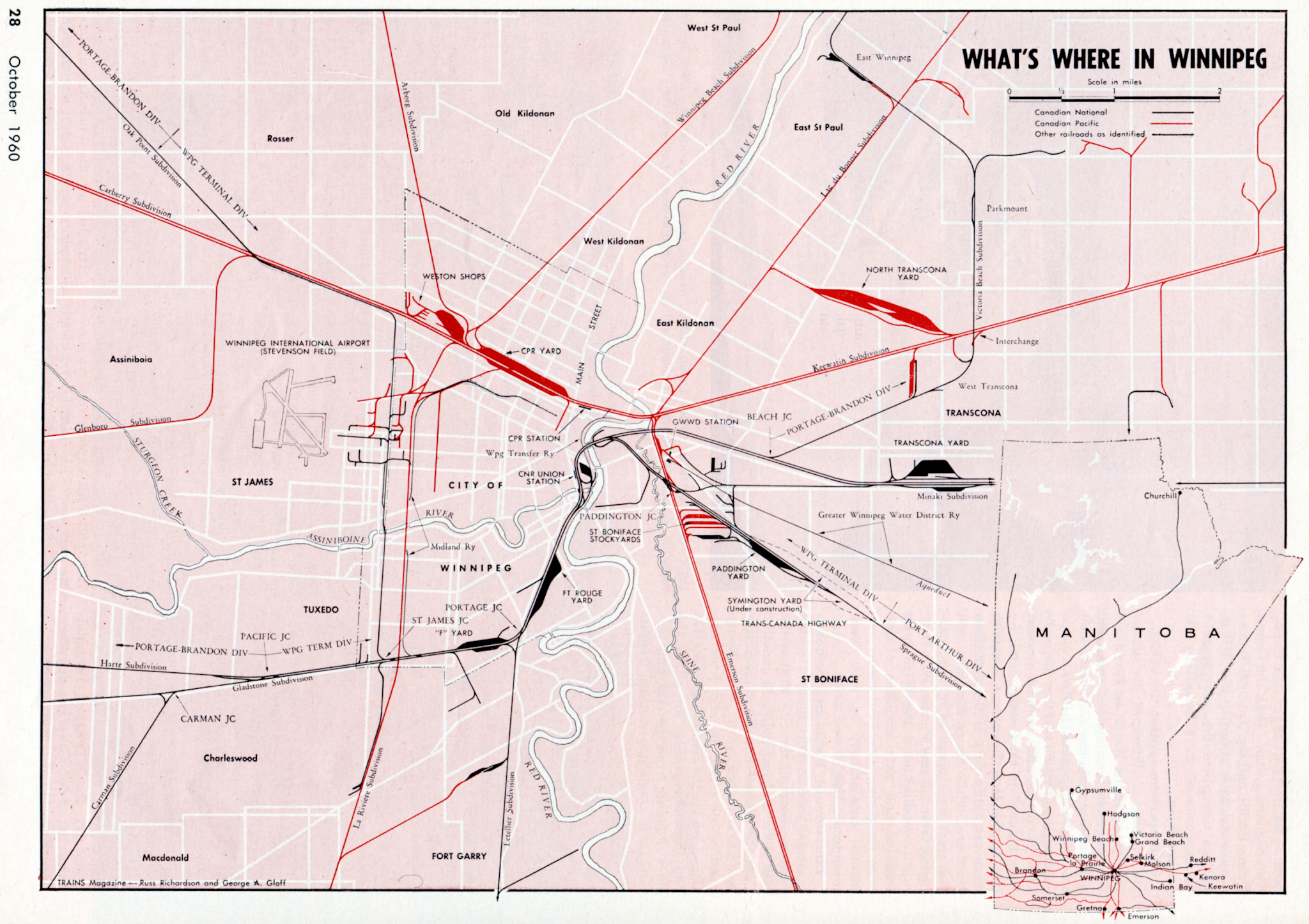
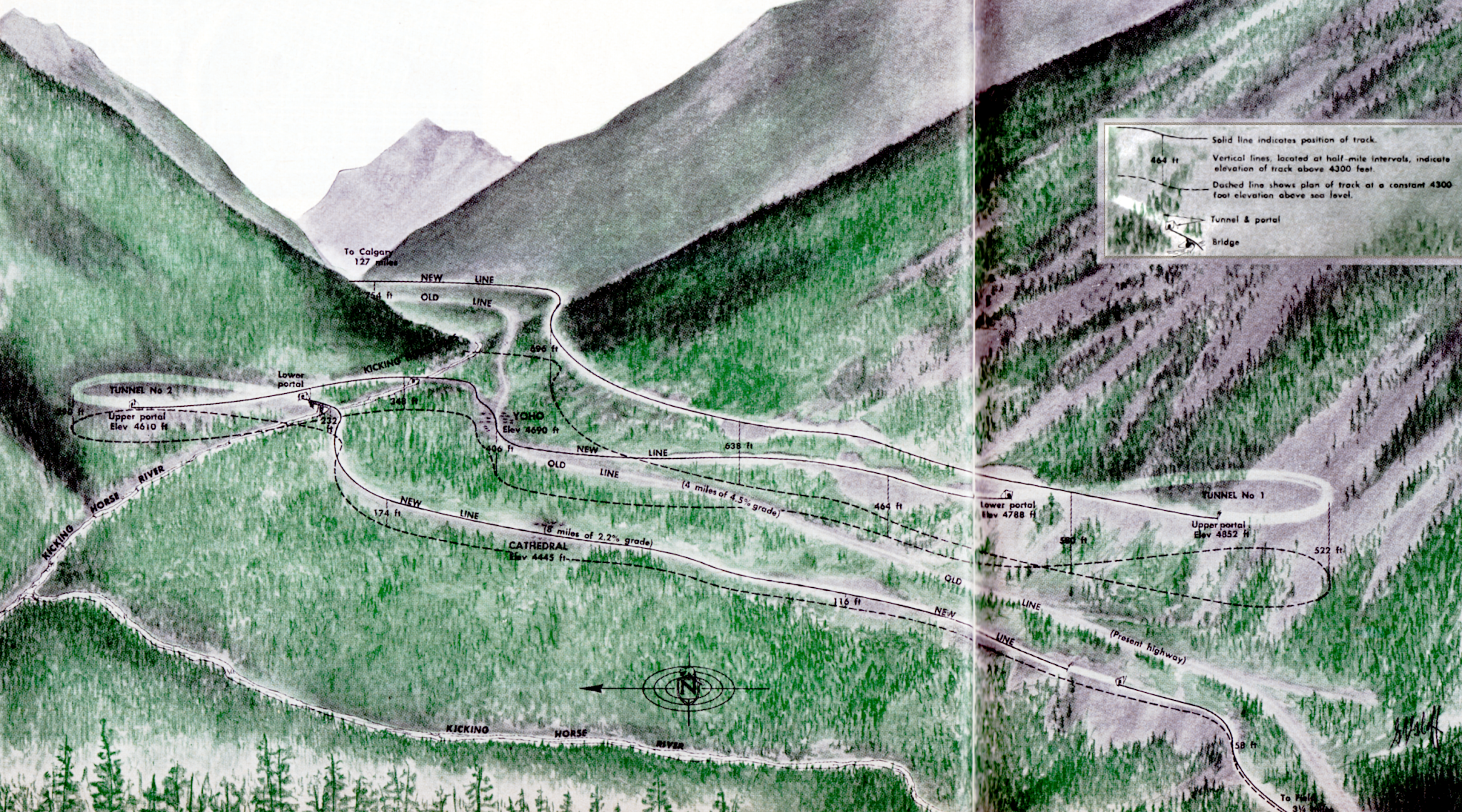
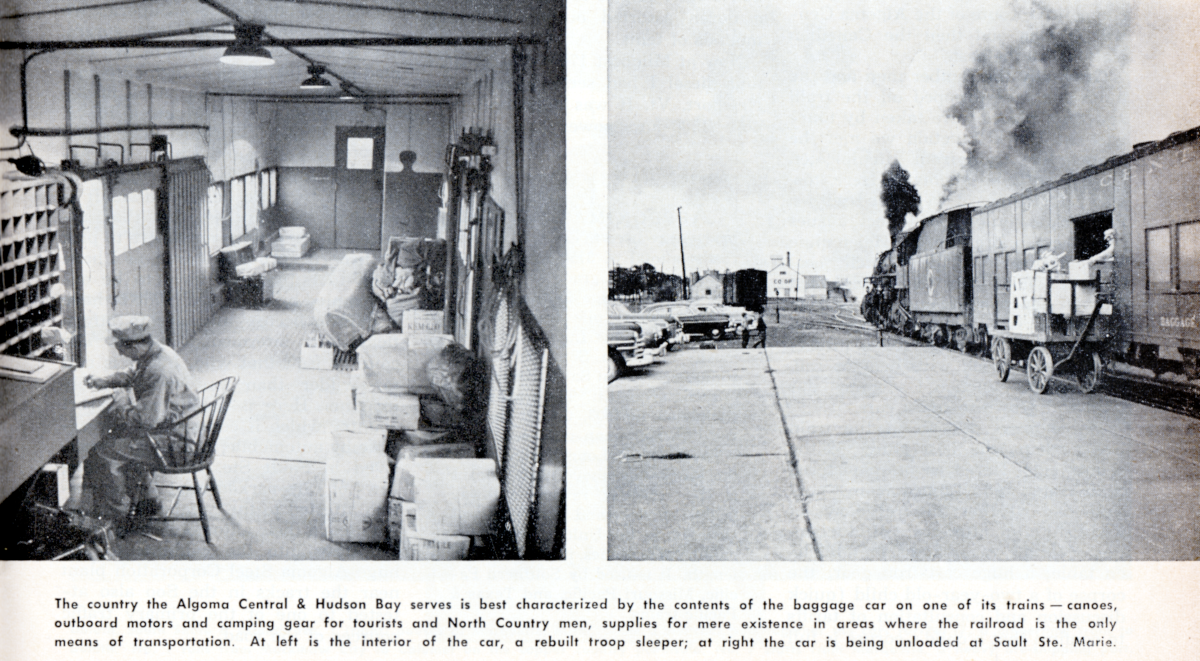
Winnipeg map 1960, Spiral Tunnels diagram, ACR Baggage Car interior, CNR 86


Trains supplies two important historical hand-drawn images and an interesting car interior photo.


from: Trains and Travel, Railroad and Photo Annual, 1953


While 3/4 front views of locomotives are nice, interior rolling stock photographs are dandy for depicting the human experience of railroading and rail travel.

Photos by AC Kalmbach, himself, from: Trains and Travel, Railroad and Photo Annual, 1953


Somewhere I read that a surprising number of light steam locomotives operated from the beginning of the CNR (they generally originated from the CNR's predecessor railways) until near the end of steam in 1960. 

... Of course, these light locomotives would have been rebuilt a number of times. They continued in service because they were ideally suited to light-rail branch lines which had never been upgraded with heavier rail (or in some cases with significant crushed rock ballast, or tie plates) since their construction. 

Eventually, these branch lines died because of: the loss of freight and express business to trucking firms running on 'new free paved highways'; the end of Royal Mail contracts which had subsidized local passenger trains; or the growth of diesel locomotive rosters (including Budd cars) which allowed more efficient and economical servicing of the branch lines with diesel power.

After its appearance on the Westport Subdivision, which was abandoned in 1952 ...


The 86 was photographed by Don Wood heading south from Owen Sound as seen in August 1958 Trains.


30 April 2020

CPR E8 Locomotives

If you ever have an engine failure, the second engine usually has enough power to get you to the scene of the accident.

This optimistic outlook came from a hospital department head, a General Aviation flyer, who had lined our small party up with a local twin-engined charter to Rocky Mount, North Carolina in the mid-1990s. We were going on yet another computer system site visit. To transport a handful of people, this alternative was cheaper than taking a commercial flight. As well, it was direct, saving us travel time as well.

I sat with my back to the young pilot (flying the outbound trip - the younger 'first officer' flew the return) and looked over my shoulder from time to time as I jotted down data from their instruments. The cumulus and cumulonimbus clouds were nice but it was too noisy for conversation and too bumpy for reading as we made our way over New York state - so I kept notes.

As we got ready to land for refueling and customs at Baltimore, the pilot was doing some really 'fun' flying - from my perspective: we went into a sudden 45 degree bank with scenery passing across and below the nose at quite a rapid rate. It turns out we had been lining up for Runway 33 Left (1.75 miles in length), instead of Runway 33 Right (5000 feet long). The runway thresholds are staggered, about a mile apart and it was hot and hazy ... you know, a mistake any of us could make. Someone (probably a calm voice from the 'tower') was calling our pilot's attention to this little oversight. And, come to think of it, we never did find out if we had been flying 'in formation' with bigger aircraft before our sudden turn.

On the way back, the IT professional I had been sitting knee-to-knee with during the trip, was watching the fuel tanks and asked me to bring something to the attention of the pilot. Not wanting to bug the pilot (any more than I had been with my note-taking), I kind of rebuffed him. Soon, the IT guy was getting into this 'Shatner/Lithgow Twilight Zone' panic about our aircraft. So I gently touched the now-non-flying pilot's shoulder and said my friend was concerned about the fuel gauges. The pilot looked at the gauges, laughed - kind of nervously, I thought - quickly threw some switches, and checked the gauges again. My seat mate had been concerned about a tank running dry and a vapour lock forming in the fuel system which would block the flow of fuel to the engine(s). And, come to think of it, we never did find out if the second engine would have taken us to the scene of the accident.

Fortunately, many aspects of railroading aren't as unforgiving as flying. In fact, I remember reading an engineer's reflection on his experiences with the two-engined E8 - you could always manage to get somewhere in the event of problems.

The E8 seems quite foreign to most people's awareness of Canadian passenger diesels of the 1950s and 1960s. Why would anyone need a two-engined passenger diesel? After all, back then they assembled shorter or longer trains of headend cars and coaches in line with demand, or anticipated demand, e.g. for holiday travel. It made sense to have smaller building blocks of diesel units to economically match the length of the train.

This comes from a corner of a GM advertisement in the 1950-1952 Locomotive Cyclopedia ...

Locomotive Cyclopedia; 1950; Simmons-Boardman.


In fact, this was CPR's first specialized 'passenger diesel' and it was the subject of a lot of corporate hullabaloo. 


Note: Engineer Hendrick Gagnon, above, is no relation.
Well, actually, he is - if we go back to the early 1600s.
Thanks for wondering about that ...

*  *  *

Here are the sales figures and data for the CPR's American-built
E8 locomotives and their stable mates.

The Second Diesel Spotter's Guide; 1973; Jerry A Pinkepank; Kalmbach.

Now, some diagrams which show the equipment of the E8 locomotive.

Locomotive Cyclopedia; 1950; Simmons-Boardman.


In Canadian Pacific Diesel Locomotives (Dean and Hanna; 1981; Railfare) it is explained that CPR's three units were initially based in Montreal, as part of their region-by-region dieselization efforts. The original plan was to assign them from Montreal in coordination with Boston and Maine diesels as follows:
  • Newport Local (Trains 213, 214).
  • The Redwing (Trains 209, 210 - Montreal-Boston) but only as far as Woodsville, Vermont, making one round trip per day.
  • The Alouette (Trains 211, 212 - Montreal-Boston) on alternate days ... Boston & Maine through a locomotive equalizing agreement supplied their unit on alternate days.
Originally, CPR ordered E7 units to match those assigned above by B&M. However, by February 1949 EMD had introduced an improved version, the E8, and CPR changed their order accordingly.

Running without the usual large steam locomotive boiler to provide passenger car heat, the knowledge that there were two steam generators on the unit must have been quite reassuring.

This was the view from the American side:

Boston & Maine Railroad, public timetable; September 26 1954.

I don't know if the E8s were being used exclusively on their B&M connection when the timetable above was published. Over their lives, the units were used on a wide variety of assignments across Canada. Two were sold to VIA Rail in 1978. Later, they were used in western Canada on The Canadian (the 1801 was wrecked in 1968).


At Montreal West, apparently with a train for CPR's north shore line to Quebec City, here is the 1800 in August 1961. This little urchin has come off the MTC Number 90 bus from Lachine with his father.

*  *  *

Now, if you'd like to see an excellent article which goes into
a lot of well-researched information, along with photos of these
E8 locomotives in Canadian service,
visit my brother Eric's Trackside Treasure at this link: