Showing posts with label terminal elevator. Show all posts

19 September 2025

CNR 1922 CD Howe's Terminal Grain Unloader

Having seen my post about the grain doors and end doors used with wooden boxcars, Jim Christie thought I might be interested in this piece he found some time ago, from our favourite professional journal Canadian Railway and Marine World ... Page 175 of April 1922 ... if you go looking for the original at archive.org .

Clarence Decatur Howe (1886-1960) was an engineering consultant in the grain trade. He was elected to the House of Commons in 1935 at age 50. Over the years he was ... Minister of Marines, Railways and Canals (i.e. Transport); Minister of Munitions; Minister of Reconstruction (after the War); Minister of Trade and Commerce. 

He was a cabinet minister under Mackenzie King, and later St. Laurent for a total of 22 years and his accumulated wide-ranging power and authority resulted in the nickname: 'Minister of Everything'. 

In the beginning ...

Howe was born in Waltham, Massachusetts and graduated from MIT in 1907. His engineering specialty in grain elevator consulting began in 1916 at Port Arthur. So this 1922 article finds him early in his grain elevator consultation period.

*  *  *

It is with a great deal of humility that I tiptoe into the subject of terminal elevators at the Lakehead. In spite of owning many postcards, I cannot accurately describe the location, corporate builder, changes of ownership or current status (standing or demolished) of most of the elevators shown in my postcards.

I believe that the two postcards in this post represent the elevator in CD Howe's article. Elevators are long-lived assets which are often subject to considerable alteration to modernize their automated systems. At least one catastrophic explosion, with loss of life, caused significant damage to this elevator, as well. 

If I understand some of the excellent websites which document these buildings (and the article text), part of this elevator was constructed not of poured concrete but multiple layers of tiles. Some fascinating photos of the tile bin interiors can be found on the internet.

You should start here:

https://friendsofgrainelevators.org/


Postcard mailed in 1912.

from: Guardians of Progress; Thorold J Tronrud; 1993; Thunder Bay Historical Museum Society.

While this map shows some aspirational real estate developments, I believe it accurately positions the grain elevators on the waterfront. As there was only one 'CNR' back in 1914, the postcard image shows the postcard elevator by the 'O' in Superior.

*  *  *

Jim Christie's article appears below. CD Howe writes in straightforward engineering terminology. You can see his ability to cut to the essential as he describes the cumbersome power shovel work when compared to his gravity dumping system. 

The article details at some length the description of the mechanism and the rationale for its design. Much of the value of this post comes from the images, so you may wish to concentrate on them if the description becomes too abstruse.

I have tried to make the text as legible as possible and the illustrations as clear as possible. I have provided the images early in the article as it may make your journey through the explanation a little easier.


The serial number of the Valentine postcard below suggests a 1927 publishing date.
It seems to show the opposite view (the lake side) of the elevator.

Unused postcard. The date may be the date purchased.

end

19 November 2021

1961 - Photos and Trading Partner Statistics

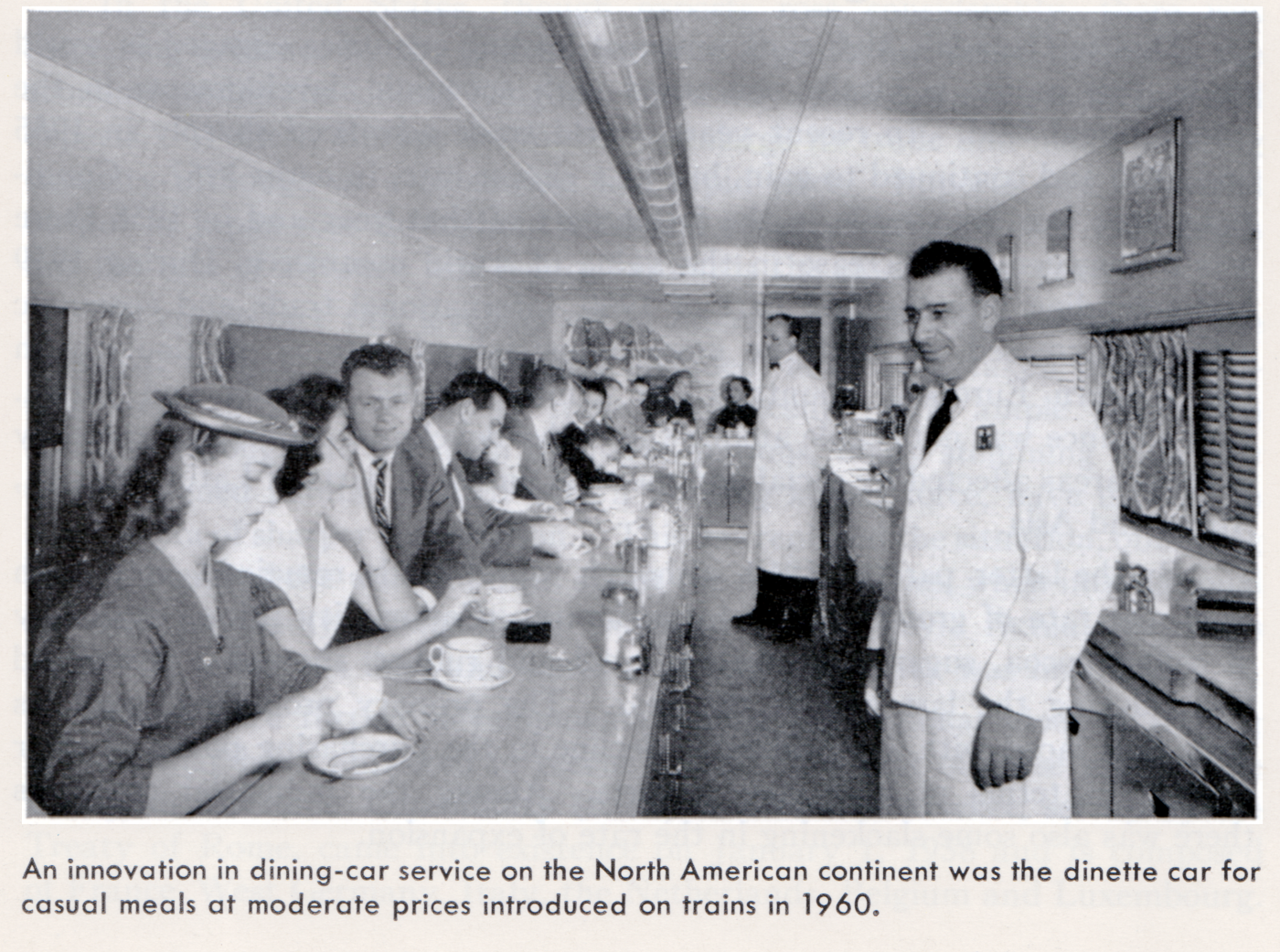
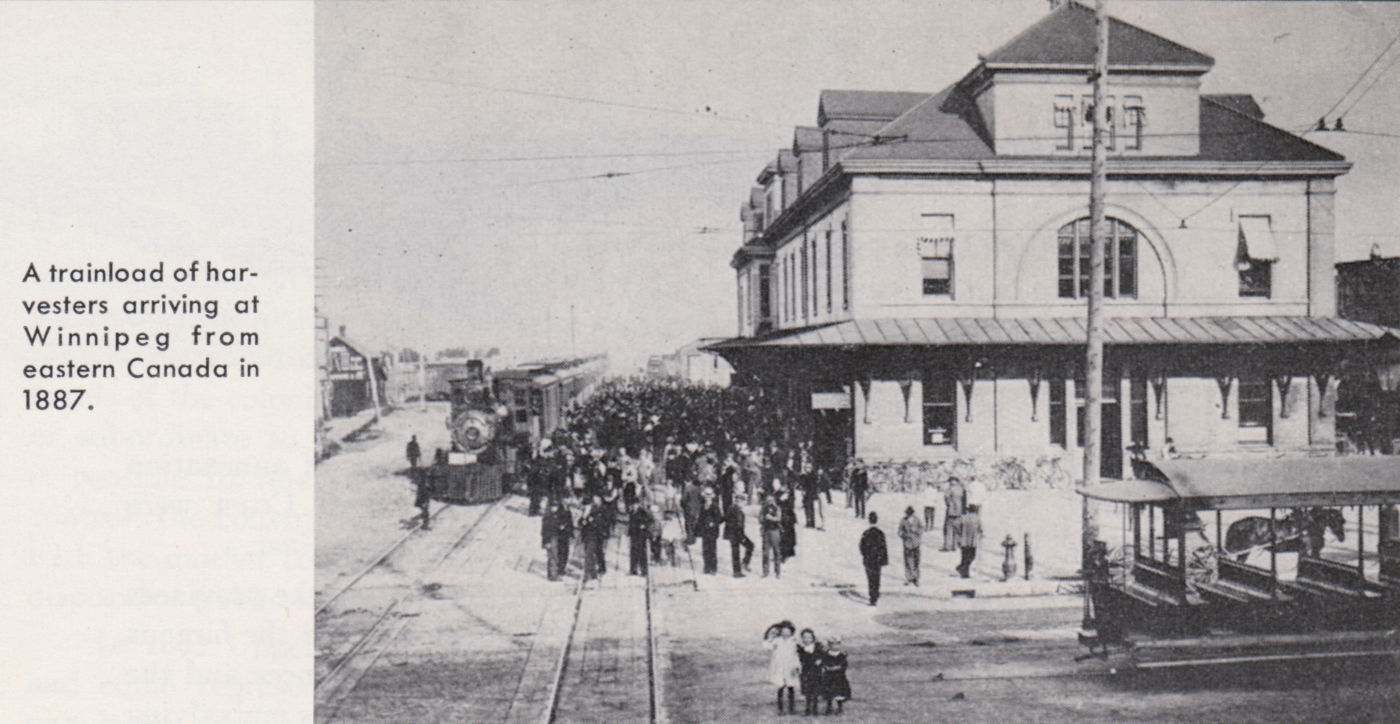
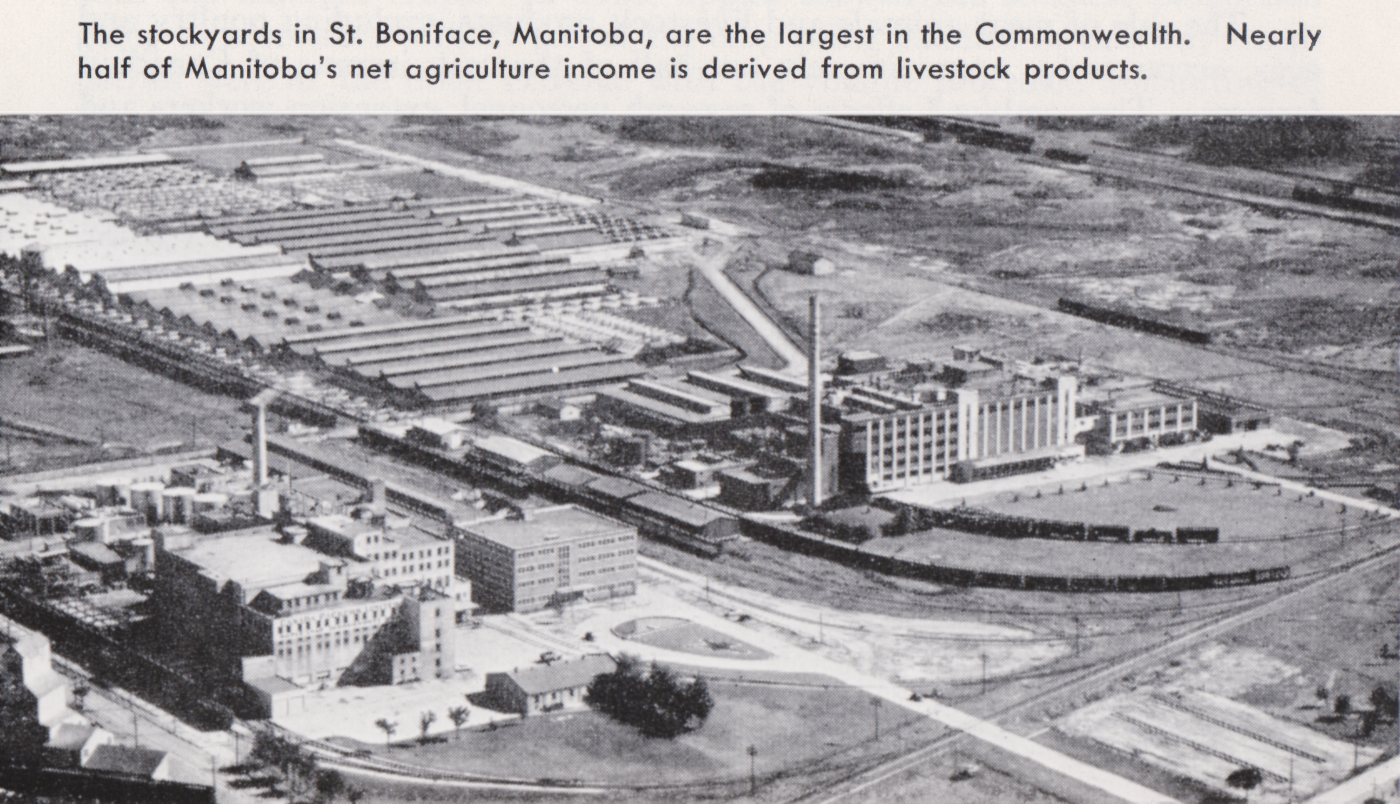
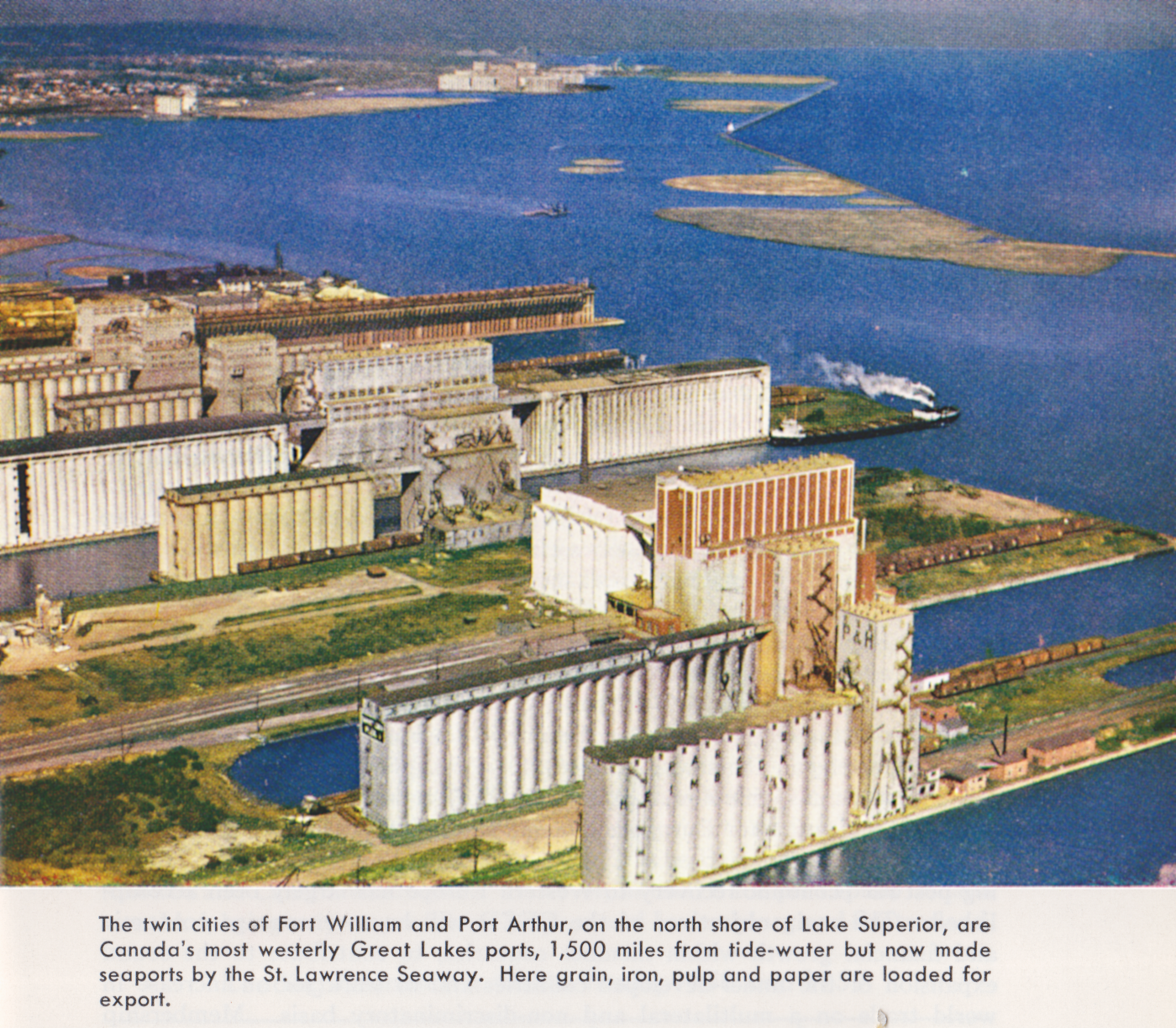
Here are: St Boniface stockyards, the Dinette, harvesters at CPR Winnipeg in 1887, the terminal elevators at Fort William.

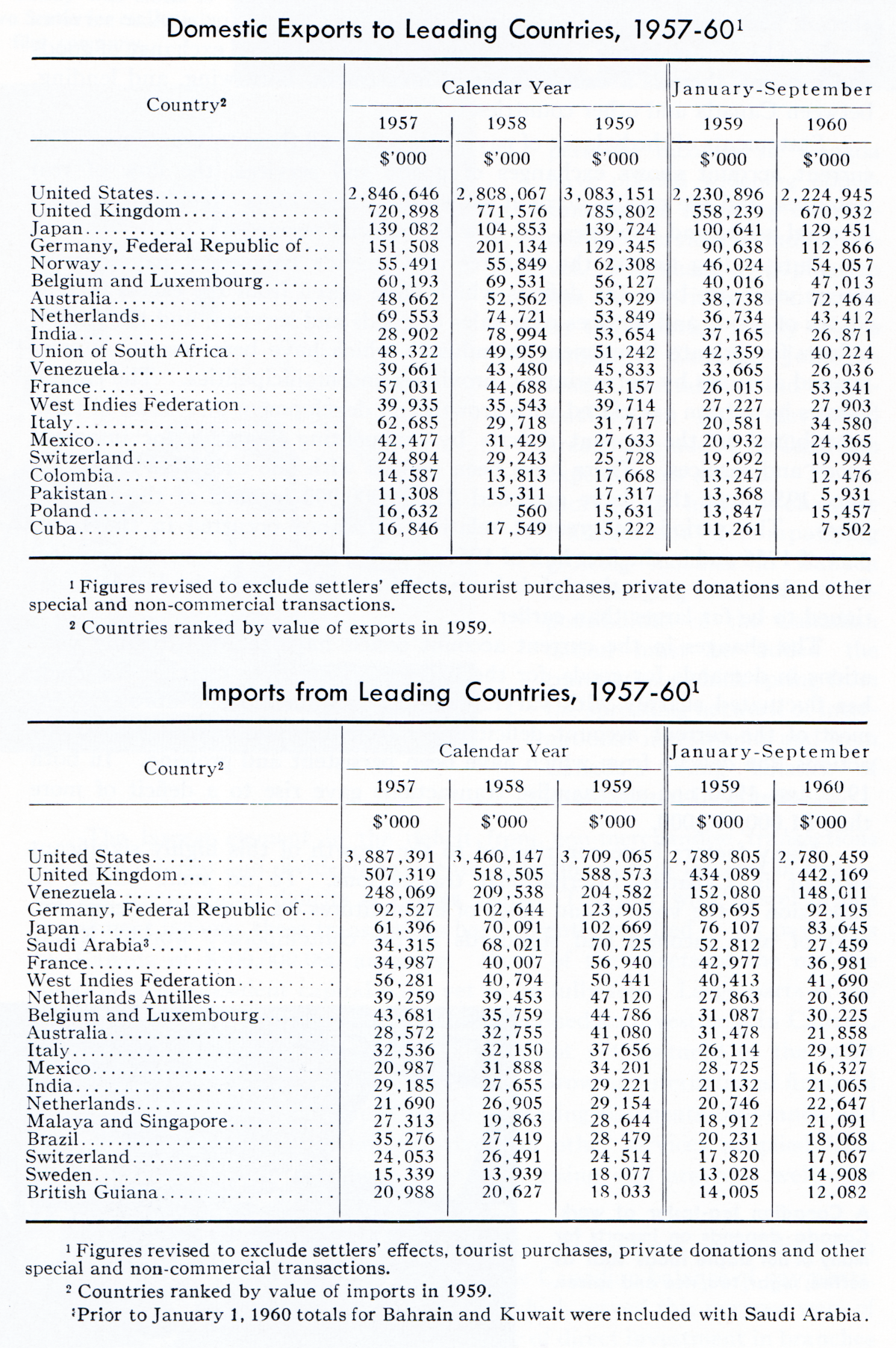
Tables of our top trading partners1957-1960 are interesting to compare and contrast with today's situation.

... As you can guess, there are two big countries missing from both lists.


Here are a few images from the Canada, Official Handbook of 1961.

In the book, the dimensions of the photos are about 2 inches by 4 inches.


If you look at the Imports table at the bottom, you may see the effect of Canadians opting to buy the Volkswagen Beetle in increasing numbers. 


21 August 2016

Portage 1987, Fourth Section - A Last Look at Churchill


At Cape Merry (named for John Merry, deputy-governor of the Hudson's Bay Company, 1712-1728), the door at the right led to the powder magazine for the Cape Merry cannon battery - constructed in the late 1740s. The frame at the left is a benchmark for dredging of the harbour.

*  *  *

Unless otherwise noted, black and white images and diagrams are from:

  Province of Manitoba Royal Commission Inquiry into Northern Transportation; Arthur V Mauro; 1969; Government of Manitoba.

*  *  *

Above, Fort Prince of Wales in a partially restored state in the 1960s.


The Cape Merry battery, on the east bank of the Churchill River is in the foreground.
Fort Prince of Wales is seen beyond it on the far side of the Churchill River.


Churchill on Hudson Bay; Angus and Bernice MacIver; 1982; The Churchill Ladies Club.
The map above comes from a self-published local history of Churchill's long period of human settlement. 'Fort Churchill V' marks the location of the large American military base which was operated by various American and Canadian units between 1942 and the mid-1960s. At a local museum we were told that during the World War II 'boom years' there were about 7000 people on the US base and about 4000 residents at Churchill itself.

The MacIvers were a couple who trapped in the area and spent their vacations 'down south' researching local history. I asked about the MacIver name because I had seen an employee timetable with a station named 'MacIver'. This may have been a flag stop near their trap line. ... The museum interpreter replied that she had applied to the Geographical Names Board of Canada to name a place after them. As a result, a lake on their former trap line was named MacIver.

Churchill on Hudson Bay; Angus and Bernice MacIver; 1982; The Churchill Ladies Club
Above: Angus and Bernice MacIver in the 1960s.

Location of MacIver Lake.

*  *  *

Some Local Details from the Royal Commission

The isotherms on the map above show how Hudson Bay affects local land temperatures.
You can also see how short the shipping season is on average.

*  *  *

Whether it be tundra or taiga, here is a map of 'Forest Inventory Sections' near Hudson Bay.

*  *  *

Detail on the Port of Churchill in the 1960s

The Port of Churchill in the mid-1960s.

In 1987, we were told that 15-25 ships were docking there per season with the port's financial break-even point being 18 ships. The terminal elevator operators came from the southern prairie provinces. Two barges and a tug boat were used to supply local Inuit settlements with fuel oil, etc during the shipping season.


The Montcalm is a Canadian Coast Guard ship.


*  *  *

A Few More Photos from Our Trip in 1987


This shows part of the 'Eskimo Museum' which was set up by the local Catholic diocese
to preserve and display carvings and other art and artifacts of the area.


This is our tour gang with our brand new school touring bus. 
The facility here is used for holding local polar bears 
who become 'too friendly' with human habitation ... 
until the ice forms and then can depart to hunt for seal.

Pens inside are designed to accommodate mother bears and cubs.
Some of the barrel trap trailers can be seen at the left.

In 1987, we were told that 80-120 cubs were born annually in the denning area located along the railway, 40 miles south of Churchill.

Our tour ran from about 09hr until 17hr.
The other photos below were taken between about 19hr and 20hr.


The Churchill station is at the extreme left.
To the right is the informal settlement along the Churchill River estuary known as 'The Flats'.
Originally, its residents were mainly local aboriginal people, including 'Metis'.


Two flatcars form the piggyback ramp at Churchill.
The second one is blocked-up on sections of ties.
The provincial highway ends at Thompson - where these special TOFC cars are lifted and set off.


An auto transporter appears above in 1987.
Below is a section from the 1969 Royal Commission report about transporting autos
to Churchill and other settlements along the railway.


Anywhere else, our consist would be complete and ready to go.
However, there is still some work to do ...


... some detail of the rear of the station.


Our passenger crewman is lifting those intermodal cars with our passenger power.


The conductor who joined our train at Thompson,
whom we code-named 'Cornelius' (as in WCvH)
leads the movement back to the train - we will be departing very soon.
You can see the steam connections beneath the flatcars to supply train heat.
We boarded around 2030hr for the return trip to Portage la Prairie.

*  *  *

As we prepare to depart, here is the 1969 Royal Commission section about Churchill
- from the Executive Summary.